A Field Guide to Window Types
How a window opens is a performance decision - egress, ventilation, air-sealing, and sightlines all follow from it, before you ever choose the glass.
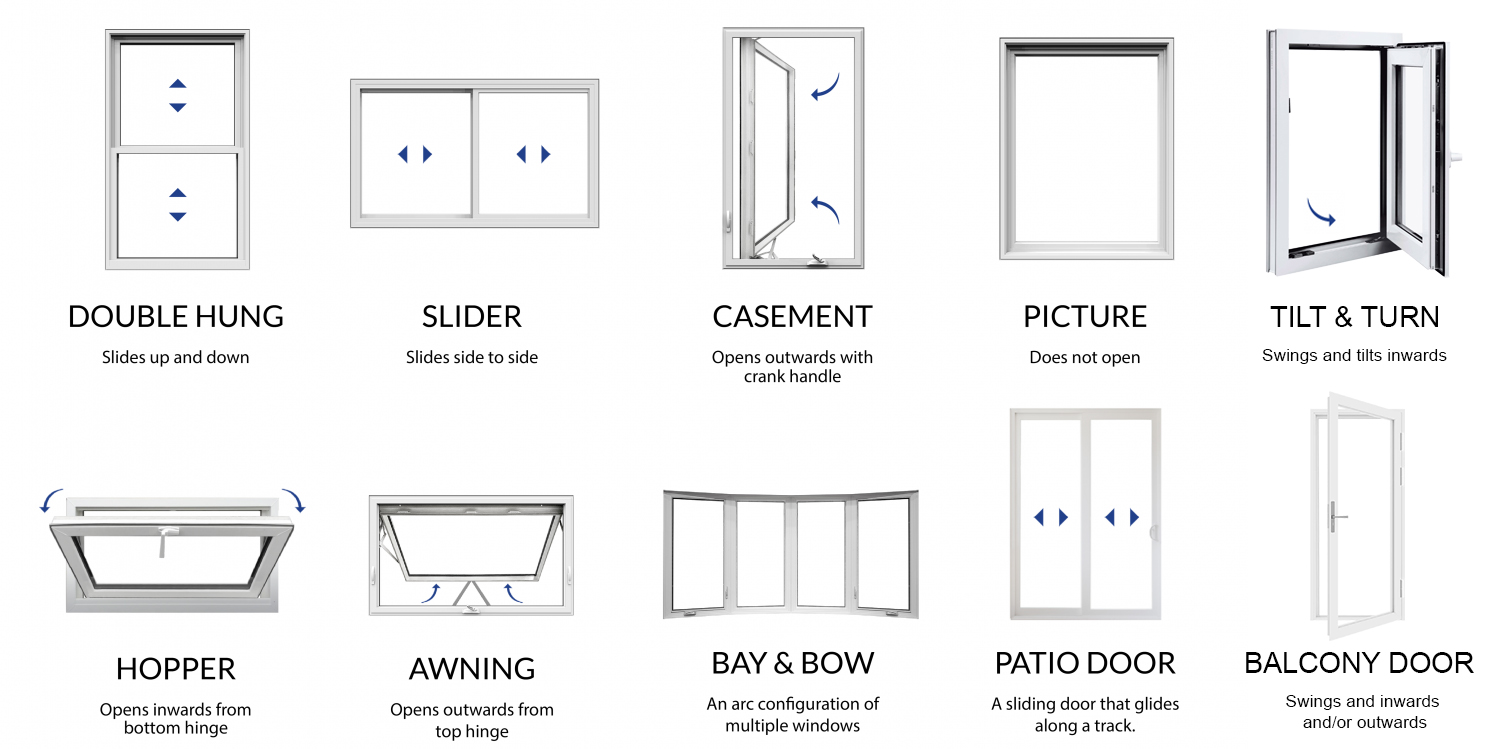
Window “type” sounds like a style choice, and it’s usually presented as one. In a New York building it’s closer to a performance decision. How a window opens determines how much of the opening you can actually use for egress, how well it seals against air and noise, how it’s cleaned above the second floor, and how much frame interrupts the view. The types below cover almost everything specified in the city’s housing stock - from the double hung that defines its prewar blocks to the European tilt-turn that has become standard in high-performance work.
Double hung
The default of the city’s prewar stock - brownstones, prewar apartments, co-ops. Both sashes slide vertically, and a modern double hung tilts in for cleaning from inside, which matters above the second floor. The detail to catch at the spec stage: a double hung only ever opens half its area, so for a bedroom that has to satisfy egress, the unit often needs to be sized up to clear the minimum opening - a decision to make on the drawings, not after DOB comments come back. Because it seals along its sliding tracks rather than by compression, its airtightness rarely matches a swing window’s.
Slider
Horizontal operation, one or both panels moving. The right call where vertical clearance is limited or where you want a wide, low-profile opening - high-rises and contemporary interiors especially. Like a double hung, it seals along a track rather than by compression, so airtightness is typically lower than a swing unit. Worth weighing deliberately against the building’s energy target rather than choosing on sightline alone.
Casement
A single sash on side hinges, cranked outward. The whole sash swings clear, so it yields close to its full size as clear opening - frequently the easier route to egress in a tight bedroom where a double hung would have to grow. When locked, the sash pulls tight against the frame’s weatherstrip, which makes casements among the tightest-sealing operable windows you can specify, a benefit on both energy and noise. The trade-offs are real: an outswing needs clear space outside, not over a walkway or past the property line, and the hardware is the part that needs service over time.
Picture / fixed
Doesn’t operate, and that’s the point. It maximizes glass and view, and because there’s no operating seal to leak, it posts the best thermal numbers of any unit type. It’s almost always paired with operable windows nearby to handle the ventilation and egress the fixed glass can’t.
Tilt-turn
The European mechanism, and worth separating from the American casement. One handle, two motions: tilt the sash in at the top for secure background ventilation, or swing it fully inward to open or clean. Multi-point hardware compresses the sash on all four sides, which makes a tilt-turn typically the airtightest operable window available - the reason it dominates Passive House and high-performance work. The cost is interior clearance, since the sash swings into the room.
Hopper
Bottom-hinged, opening inward from the top. The standard for basements and below-grade openings, and common as a vent unit in baths and commercial spaces. Because it swings inward, nothing can sit in its path.
Awning
Top-hinged, swinging outward from the bottom. It sheds water, so it can stay cracked in light rain - useful over a kitchen counter, in a bathroom, or as a band of operable units beneath a large fixed pane. It shares the casement’s compression-seal advantage.
Bay & bow
Less a window than an assembly. A bay projects from the facade in angled segments - commonly three - while a bow curves through more, smaller lites. Both push past the building line, which in New York means attention to projection rules and the property line, plus the structural support, insulated seat, and weathertight roof any projecting assembly requires. On these, the head and seat detailing deserve as much care as the glass.
Patio door
A sliding glass door that glides along a track - the standard for wide terrace and balcony openings where you want maximum glass and a low-profile threshold. Because it seals along a track, the threshold detail is everything: wind load, thermal break, and waterproofing at the sill are where a sliding terrace door succeeds or fails in a New York building, far more than the panel count.
Balcony door
A hinged door that swings in, out, or both, rather than sliding - often the better choice for single-leaf balcony or terrace access, or paired as a French set. A swing door’s compression seal can outperform a slider on air and water tightness, which matters on exposed, high-rise terraces. The trade-off is clearance: an in-swing gives up interior floor space, while an out-swing needs clear deck and has to be detailed for wind catch.
Type narrows the field; it rarely settles the spec on its own. Two decisions do the heavier lifting - what the frame is made of, and how well the unit is actually sealed into the wall.
Planning a window project?
Tell us about your building and we’ll come back with the specifics - the right type, frame, and spec for your openings, and a clear path to permit and install.
Request a Free Estimate →