Anchorage and Wind Loads: What Actually Holds a Window in Place
Glass gets the attention - but anchorage is what carries wind load into the building. How anchors are sized, where they fail, and what to look for on site.
When people think about window performance, they usually think about the glass. In reality, one of the most critical elements is something you never see once the job is done: anchorage. No matter how good the window is, it still has to resist wind load - and that load has to go somewhere.
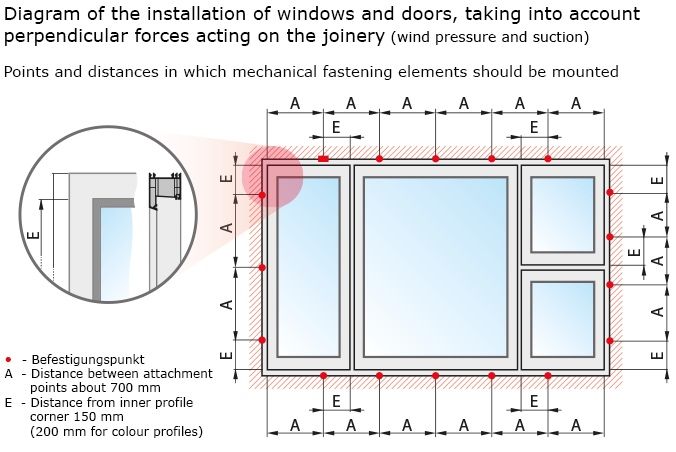
What the Window Is Designed to Resist
In NYC, wind loads are not insignificant. Every window is designed to handle two opposing conditions:
- Positive pressure - wind pushing in on the window.
- Negative pressure - suction pulling the window out.
In many cases, suction is the governing condition. That load travels along a defined path:
Glass → Frame → Anchors → Structure
What Anchorage Actually Does
Anchors are not just holding the window in the opening. They are responsible for:
- Transferring wind loads into the building structure
- Maintaining alignment under pressure
- Allowing for movement where it is required
This is where design matters - the anchor has to do all three at once.
Why the Calculations Matter
Anchor spacing, type, and embedment are not arbitrary. They are calculated from:
- Wind load requirements
- Opening size
- Frame type
- Substrate condition
Undersized or poorly spaced anchors lead to predictable problems - excessive deflection, frame distortion, and long-term system failure.
The Balance: Strength vs. Movement
Anchors have to be strong enough to resist wind load, but not so rigid that they restrict the movement the building actually needs - slab deflection, thermal expansion, and the like. That is why real systems use a combination of:
- Strap anchors
- Slip connections
- Receptor-based detailing
Where Problems Actually Happen
Most issues don’t come from the design intent. They come from the field:
- The wrong anchor type used on site
- Improper spacing
- Installation into the wrong substrate
- Movement being restricted unintentionally
At that point, loads go where they shouldn’t - and the system starts compensating in ways it was never designed to.
What to Look For on Site
- Are anchors installed at the design spacing?
- Are they engaging the correct structure?
- Is movement being allowed where it is required?
The Bottom Line
Glass and frames get the attention. But anchorage is what actually connects the system to the building - and that’s where performance is either maintained or quietly compromised.
Have a project where this matters?
Tell us about your building and we’ll come back with the specifics - scope, performance targets, and what the engineering or installation path looks like for your case.
Request a Free Estimate →